Soften the time-zone landing
Timing suggestions for light, sleep, caffeine, screens, naps, and the first local day.
Before You Fly
- For trips crossing several time zones, move bedtime, wake time, meals, and bright light 30 to 60 minutes toward destination time for 2 to 4 days.
- Do not start the trip sleep-deprived. A tired travel day feels like jet lag and makes the first night harder.
- Set your phone and saved clock to destination time before boarding so meals, caffeine, darkness, and sleep follow the place you are going.
Time Light And Darkness
- Eastbound trips usually need morning outdoor light and a dim evening. Westbound trips usually need afternoon or early-evening light.
- Use sunglasses, shade, or indoor time when bright light would pull your body clock the wrong way.
- In the last 90 minutes before target bedtime, dim overhead lights, stop work, and put bright screens away.
Ask About Melatonin
- Ask a clinician whether melatonin is appropriate for you before using it for jet lag.
- If it has been recommended for you, follow that clinician’s instructions for dose and timing.
Caffeine, Naps, And Meals
- Use coffee or tea for local morning alertness, then stop by early afternoon so caffeine is not active at bedtime.
- If you must nap, set an alarm for 15 to 20 minutes and wake before midafternoon.
- Eat smaller meals on travel day, then put breakfast, dinner, and snacks on destination time after arrival.
Make Day One Gentle
- After landing, take a 20 to 30 minute outdoor walk when it matches your light plan.
- Keep arrival plans low-stakes: one simple meal, water, a shower, and only the unpacking needed for sleep.
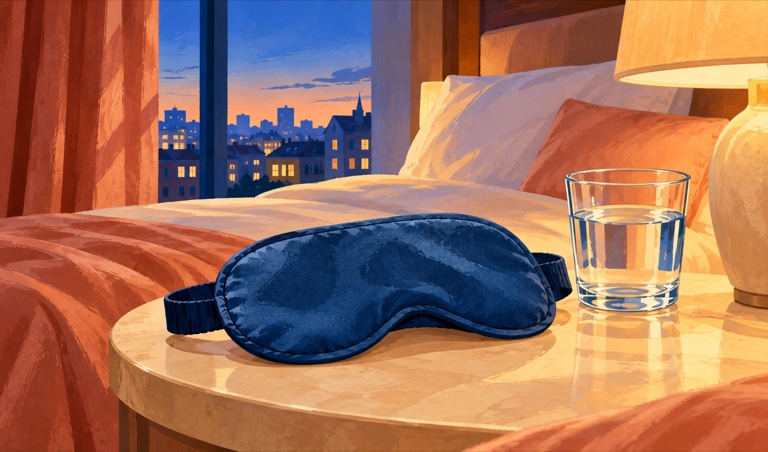
- Make the hotel room cool, dark, and quiet. Use an eye mask or blackout curtains, then hold local bedtime even if sleep starts slowly.